The 2020 United States presidential election did not end quietly, and nowhere was that tension more visible than in Arizona. In the weeks and months following Election Day, the state became a focal point for competing narratives about trust, legitimacy, and the integrity of the electoral process. What might once have been a routine certification of results turned into a prolonged national conversation, where official tallies, legal challenges, and public suspicion collided in an atmosphere of intense political polarization.
Arizona, with its rapidly shifting demographics and growing political importance, was already under scrutiny before the election results were finalized. As ballots were counted—particularly mail-in ballots, which constituted a significant share of votes in the state—delays were widely reported and closely followed. Election officials in counties such as Maricopa County emphasized that these delays were a normal part of processing large volumes of mail ballots, many of which required signature verification and reconciliation procedures.
Yet in parallel to official explanations, narratives began to circulate through media outlets, political figures, and online communities suggesting irregularities. These ranged from questions about ballot handling procedures to far more serious allegations of intentional manipulation. The divergence between official explanations and public suspicion created a widening gap in perception, one that would define much of the post-election discourse in Arizona.
As certification processes moved forward, courts across the country—including in Arizona—were asked to weigh in on claims of irregularities. In most cases, judges found that the evidence presented did not meet the legal threshold required to alter election results. Still, the persistence of doubt among segments of the public meant that legal closure did not necessarily translate into political or social closure.
The Role of Maricopa County and Election Administration
At the heart of Arizona’s election system lies Maricopa County, one of the largest election jurisdictions in the United States. The county’s election procedures are complex, involving hundreds of thousands of mail ballots, in-person voting centers, and extensive verification systems designed to ensure accuracy and prevent duplication.
During the 2020 election cycle, Maricopa County election officials repeatedly explained their processes to the public. Signature verification, bipartisan observation of ballot handling, chain-of-custody documentation, and audits were all part of the procedural framework. These systems are not unique to Arizona but are standard features of U.S. election administration, particularly in states with high mail-in voting participation.
Despite these explanations, the county became a central target of criticism and suspicion. Reports about counting delays and ballot processing timelines were interpreted by some as evidence of wrongdoing, while election officials described them as predictable outcomes of high turnout and procedural safeguards.
In the aftermath of the election, Maricopa County underwent multiple reviews and audits, including a highly publicized forensic audit conducted by external contractors. While interpretations of these reviews varied widely in political discourse, official findings from established election authorities and court decisions did not support claims of systemic fraud sufficient to alter the outcome.
The county’s role thus became paradoxical: it was both a technical administrator of one of the most heavily scrutinized elections in U.S. history and a symbolic focal point for broader national distrust in electoral systems.
Emergence of Allegations and Competing Narratives
As post-election debate intensified, a series of allegations circulated across media platforms and political commentary spaces. These included claims about ballot mishandling, improper inclusion or exclusion of votes, and external influence over election administration. Some narratives suggested coordinated wrongdoing involving political officials, while others focused on procedural irregularities.
It is important to distinguish between allegations, claims, and substantiated findings. In the case of Arizona’s 2020 election, many of the most serious accusations were never supported by verified evidence presented in court or confirmed by independent audits conducted under recognized standards of election review.
Figures such as then-Secretary of State Katie Hobbs and other state officials became central subjects of political criticism, particularly in partisan discourse. However, legal proceedings and official reviews did not establish evidence of the kind of coordinated misconduct that some narratives suggested.
At the same time, the persistence of these allegations highlighted a broader phenomenon: the fragmentation of trust in shared information systems. In an era where social media amplifies both verified reporting and unverified claims at similar speeds, public understanding of complex administrative processes like elections can become deeply polarized.
The result was not only disagreement over outcomes but also disagreement over what kinds of evidence should be considered credible in determining those outcomes.
Legal Challenges and Judicial Review
Following the certification of Arizona’s 2020 election results, multiple legal challenges were filed in state and federal courts. These cases sought to question various aspects of the electoral process, including ballot handling procedures, voter eligibility concerns, and counting methodologies.
Courts, operating under evidentiary standards, evaluated whether plaintiffs had presented sufficient factual basis to support their claims. In the vast majority of cases, judges concluded that the evidence did not meet legal thresholds necessary to overturn or alter certified results.
This judicial process is a critical but often misunderstood component of election dispute resolution in the United States. Courts do not evaluate political narratives; they evaluate admissible evidence. As such, many claims that circulate widely in public discourse never progress beyond initial filings because they lack the evidentiary structure required in legal proceedings.
The repeated dismissal of certain claims in court did not eliminate public debate, but it did establish an official record that became central to subsequent references by election officials, academic researchers, and media organizations analyzing the integrity of the 2020 election.
At the same time, supporters of alternative interpretations of events argued that courts were not fully addressing their concerns, pointing to procedural dismissals or standing issues rather than full evidentiary hearings. This divergence in interpretation further contributed to the broader national debate about institutional trust.
The Forensic Audit and Its Aftermath
One of the most discussed post-election developments in Arizona was the forensic review of ballots in Maricopa County. This audit, conducted under highly public and politically charged conditions, aimed to re-examine ballots and election materials from the 2020 election.
The audit process itself became a subject of controversy, not only because of its findings but also because of disagreements over methodology, scope, and interpretation. Different stakeholders presented conflicting assessments of what the audit revealed and what it meant for the legitimacy of the election.
Election officials and many independent analysts emphasized that the audit did not produce evidence sufficient to change the certified outcome. However, proponents of the audit process pointed to procedural observations and discrepancies they believed warranted further scrutiny.
The aftermath of the audit demonstrated a recurring theme in modern electoral politics: even when formal review mechanisms are completed, their interpretations can diverge significantly depending on political and ideological perspectives.
This divergence has broader implications for democratic governance, as it raises questions about how societies establish consensus around factual outcomes in highly contested environments.
Political Figures and Public Perception
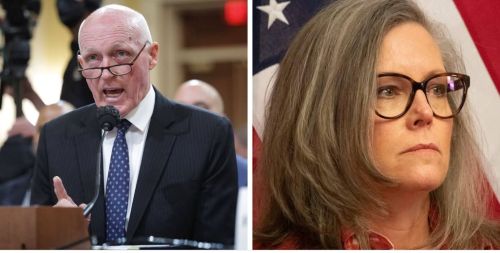
Throughout the post-election period, political figures in Arizona and beyond became central symbols in competing narratives about the election. Individuals such as Katie Hobbs and Rusty Bowers were frequently referenced in commentary, often in highly polarized contexts that reflected broader national divisions.
It is important to note that public discourse often blends verified actions, political opinions, and unverified claims into a single narrative stream. This can make it difficult for audiences to distinguish between established facts and interpretive framing.
In Arizona, as in many states, election officials operate within a framework of bipartisan oversight, statutory procedures, and public accountability. However, the visibility of political conflict surrounding the 2020 election placed extraordinary pressure on individuals in these roles, often turning administrative positions into focal points of national debate.
This phenomenon is not unique to Arizona but reflects a broader trend in which election administration has become increasingly politicized. As a result, the actions of individual officials are often interpreted not only through legal or procedural lenses but also through ideological ones.
The Role of Media Ecosystems and Information Flow
A key factor in the Arizona election controversy was the role of modern information ecosystems. Traditional news reporting, social media platforms, and partisan commentary channels all played a role in shaping public understanding of events.
In such an environment, information does not always move in a linear or verified sequence. Instead, fragments of claims, interpretations, and reactions circulate rapidly, often detached from their original context.
This dynamic contributed to the persistence of contested narratives about Arizona’s election results. Even when official statements or court rulings addressed specific claims, those clarifications did not always reach the same audiences that had encountered the original allegations.
The result was a layered information environment in which multiple versions of events coexisted, each reinforced by different sources of authority and trust.
Understanding this ecosystem is essential for analyzing not only the Arizona case but also broader patterns in contemporary democratic societies, where information credibility has become as contested as political outcomes themselves.
Institutional Response and Procedural Transparency
In response to widespread scrutiny, election officials in Arizona and other states expanded communication efforts aimed at explaining election procedures. These included public reports, audits, press briefings, and educational materials designed to clarify how ballots are processed and counted.
Maricopa County, in particular, emphasized transparency measures such as bipartisan observation, public logic and accuracy testing, and documentation of chain-of-custody procedures. These efforts were intended to provide assurance that the electoral process followed established legal and technical standards.
However, transparency does not always translate into consensus. While some members of the public found these explanations reassuring, others viewed them as insufficient or unconvincing. This gap between institutional communication and public perception highlights the challenge of maintaining trust in complex systems under conditions of political polarization.
The Arizona case thus illustrates a broader governance issue: the need not only for procedural integrity but also for perceived legitimacy, which depends heavily on shared trust in institutions.
Long-Term Implications for Electoral Trust
The events surrounding Arizona’s 2020 election continue to influence discussions about electoral reform, public trust, and democratic resilience. Even years later, the narratives formed during this period remain active in political discourse, shaping debates about voting methods, certification procedures, and oversight mechanisms.
One of the central lessons often drawn from this period is that modern elections are not only administrative processes but also communication challenges. The technical accuracy of vote counting must be matched by effective public understanding of how those systems work.
At the same time, the persistence of competing narratives demonstrates that factual resolution alone may not be sufficient to restore consensus in deeply divided environments.
A Continuing Conversation Rather Than a Closed Chapter
The story of Arizona’s 2020 election is not easily reduced to a single conclusion. It exists instead as a complex intersection of legal processes, administrative systems, political interpretation, and public perception.
What remains clear is that multiple official reviews and judicial decisions have addressed the most serious allegations raised in the aftermath of the election. At the same time, the intensity of public debate surrounding those events reflects broader questions about trust, information, and democratic legitimacy in the modern era.
In the end, Arizona stands not only as a case study in election administration but also as a reflection of how societies process disagreement in an age where facts, interpretations, and beliefs often travel at the same speed.
The conversation, in many ways, continues—not because the systems involved are silent, but because trust itself has become one of the most contested elements in the democratic process.