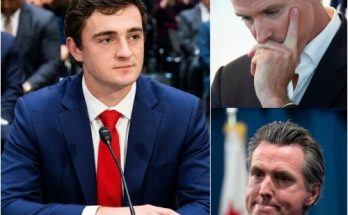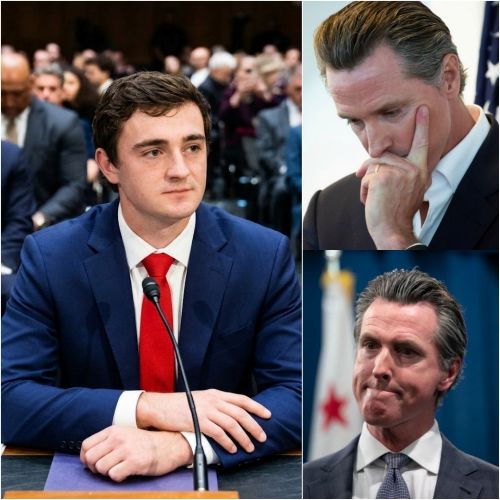
In March 2026, a series of claims by Nick Shirley, a political influencer and independent journalist, sparked nationwide controversy. His allegations, directed squarely at California’s election system, suggested that illegal immigrants and noncitizens were exploiting loopholes in California’s universal mail-in voting system to cast votes in elections. Shirley’s claim — that these individuals were being automatically registered through the state’s motor voter law — would, if substantiated, represent one of the most significant scandals in modern American political history.
However, the debate quickly escalated into a highly charged partisan issue, with California state officials, political leaders, and legal experts pushing back against Shirley’s claims, calling them misleading and unsupported by solid evidence. This controversy raises important questions about the integrity of the electoral system in one of the nation’s largest and most influential states.
Nick Shirley’s Claims: A “Loophole” in California’s Voter Registration System?
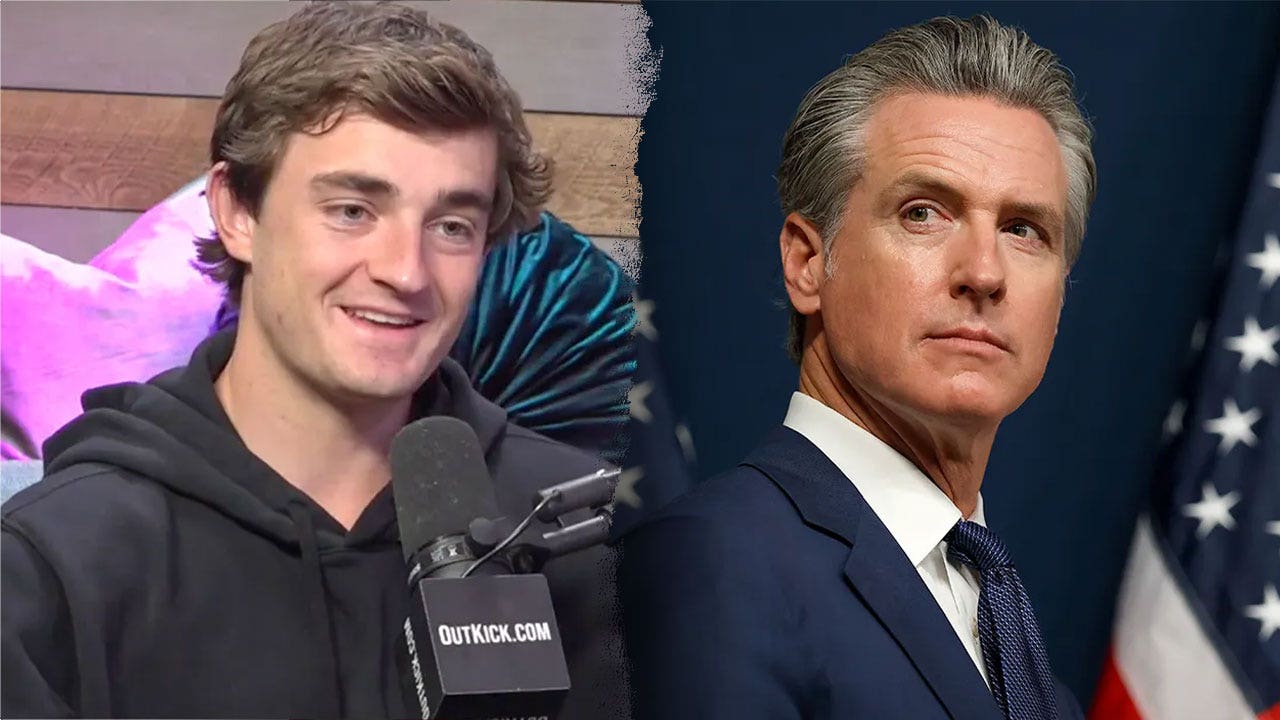
Nick Shirley, best known for his politically provocative videos, first gained significant attention in 2025 with his allegations surrounding what he described as systemic fraud and abuse of California’s motor voter system. Shirley’s core claim revolves around a purported voter registration loophole that he believes allows noncitizens and illegal immigrants to register to vote and participate in elections.
California’s motor voter law, which automatically registers eligible citizens to vote when they interact with the Department of Motor Vehicles (DMV), was passed as part of the state’s efforts to increase voter participation and ease the registration process. The law was introduced by Governor Jerry Brown and expanded under Governor Gavin Newsom. It has been hailed as a progressive measure designed to remove barriers to voting.
However, Shirley claims that the lack of a strict verification process for voter registration in the state presents an opportunity for individuals who are not citizens to register to vote. He specifically highlights that individuals applying for driver’s licenses and other services at the DMV are automatically registered to vote, unless they opt out. While the system does require proof of citizenship through federal databases, Shirley asserts that these safeguards are insufficient and fail to catch fraudulent registrations by illegal immigrants.
According to Shirley, the universal mail-in ballot system exacerbates the problem by allowing voters to cast their ballots without presenting ID at the time of voting. He claims that this system, coupled with the lack of sufficient ID verification, creates an environment ripe for exploitation, enabling ineligible individuals to participate in elections.
Shirley has also alluded to the unverified testimony of a noncitizen who allegedly managed to register using California’s system. Additionally, Shirley has pointed to instances of irregularities in the voter rolls, such as voters registered at suspicious or improbable addresses and discrepancies in age data. He claims that these instances serve as proof of systemic vulnerabilities within California’s election system.

California’s Official Response: Dismissing Allegations as Politically Motivated
California’s Secretary of State, Shirley Weber, quickly responded to the growing controversy. In an official statement, she rejected Shirley’s claims, calling them misleading and factually inaccurate. Weber emphasized that California’s election laws are some of the strictest in the nation, with multiple layers of verification in place to prevent fraud.
Weber pointed out that California’s motor voter law requires registrants to swear under penalty of perjury that they are U.S. citizens. In cases where there are doubts about eligibility, the California Department of Motor Vehicles (DMV) cross-checks voter registration information against federal databases like the Social Security Administration and the Department of Homeland Security to verify that registrants are indeed U.S. citizens. If discrepancies are found, individuals are removed from the voter rolls.
Weber and other state officials also emphasized that the state’s voter rolls are regularly maintained and that the California Secretary of State’s office purges names from the rolls when it finds individuals who have died, moved, or become otherwise ineligible. This process is intended to ensure that only eligible citizens participate in elections.
The California Attorney General, Rob Bonta, also weighed in on the controversy. He strongly rejected Shirley’s allegations, calling them “politically driven” and “undermining trust in our elections”. Bonta pointed out that voter fraud is extremely rare in California and that the state’s robust election security measures are designed to prevent it. He also highlighted the fact that California law makes it a felony for anyone to falsify voter registration information, and that the penalty for perjury ensures that those who attempt to defraud the system are held accountable.
What Experts Say About Voter Fraud Claims
Election law experts and nonpartisan organizations have weighed in on the issue, offering critical insights into the broader implications of Shirley’s claims. According to scholarly research, voter fraud, particularly involving illegal immigrants and noncitizens, is an extremely rare phenomenon in U.S. elections. For instance, a study conducted by the Brennan Center for Justice found that instances of in-person voter fraud account for less than 0.0009% of all votes cast across the United States.
Election law experts stress that California’s system is designed with multiple safeguards to prevent fraud, including ID verification for first-time voters and cross-checking against federal databases. In fact, most of the claims of fraud made by Shirley — such as people registered at non-residential addresses — are likely to be administrative errors, not intentional acts of fraud. These errors are common in large-scale registration systems and are usually addressed through regular updates to the voter rolls.
Experts also point out that the California Secretary of State’s office has repeatedly investigated claims of voter fraud and found no evidence of widespread or coordinated efforts to register ineligible voters. In 2018, the California Voter Fraud Task Force found that the incidence of illegal voting in California elections was essentially nonexistent, with less than 20 cases of fraudulent voting reported out of nearly 20 million ballots cast in the 2016 presidential election.
Additionally, critics of Shirley’s claims argue that focusing on voter fraud distracts from more pressing issues in the American electoral process, such as voter suppression and the disenfranchisement of marginalized communities. The push for stricter voter ID laws, which Shirley’s narrative taps into, is seen by many civil rights groups as a discriminatory measure that disproportionately impacts low-income communities, people of color, and the elderly, who are less likely to possess government-issued identification.
The National Debate: Voter Integrity and Election Security
The debate over voter fraud in California is part of a larger national conversation about election security and voter access. As voter ID laws and other election reforms gain traction across the United States, Shirley’s allegations provide fuel for the conservative push to implement stricter measures to combat alleged voter fraud. The idea of requiring photo ID for voting has gained significant support among Republicans and others concerned about election integrity. Supporters of such measures argue that requiring voters to show ID ensures that only eligible citizens vote, helping to safeguard democracy.
However, opponents of stricter voter ID laws, including many Democrats and civil rights organizations, argue that these laws are a solution in search of a problem. They point out that voter fraud is extraordinarily rare, and that these laws are often used as a pretext for voter suppression. For instance, studies have shown that voter ID requirements disproportionately affect communities that are already underrepresented in the electorate, such as people of color, the elderly, and low-income individuals.
Shirley’s claims, while controversial, reflect the ongoing battle over election integrity in the United States. For those who believe that voter fraud is rampant, such allegations provide a rallying cry for further tightening of voter registration and voter ID laws. For others, the claims are seen as exaggerated or misleading, and they serve to distract from the real issues facing the American electoral system.
What’s Next? Investigations and Political Ramifications
As of now, Nick Shirley has not provided the concrete evidence that he promised would back his claims. This has left many questioning the credibility of the allegations and wondering whether they will fade as another political flashpoint or develop into a broader scandal. The California Secretary of State’s office, which has stated that it is committed to transparency, has called for any substantial evidence of fraud to be handed over to election officials for investigation.
While Shirley has indicated that he will release additional evidence, there has been no confirmation from independent investigators that the claims are valid. The media has largely been skeptical of Shirley’s claims, with many commentators and news outlets urging caution and calling for verification before rushing to conclusions.
If Shirley’s allegations are proven to be accurate, it could prompt a major overhaul of California’s voter registration system, with new safeguards potentially put in place to ensure that only eligible citizens are able to register and vote. This could also set off a wider push for election reforms in other states, particularly in those where mail-in ballots and motor voter laws are also in place.
Conclusion: Trust in the Election System
As the debate continues to unfold, trust in the electoral process remains a critical issue. Allegations of voter fraud — whether substantiated or not — have the potential to harm public confidence in elections, particularly in a climate already fraught with political polarization and mistrust. It is crucial for both politicians and election officials to address these concerns transparently and factually.
For now, the future of Shirley’s claims remains uncertain, but they highlight the deep divide in the United States over voter rights, election security, and the role of government in ensuring fair and free elections. What happens next — whether Shirley’s evidence is validated or debunked — will likely shape the national conversation on election integrity in the years to come.