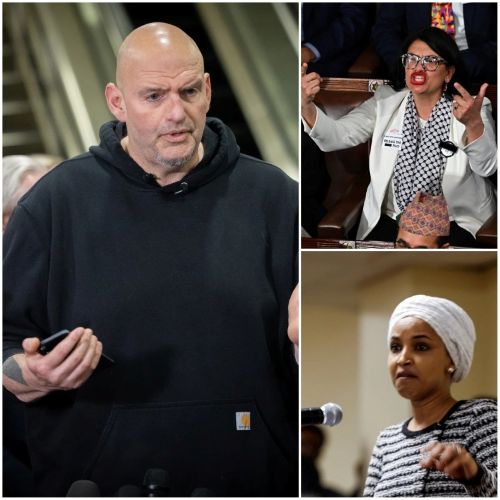
In an unprecedented moment on the floor of Congress, Senator John Fetterman delivered a powerful and controversial speech that has already sent shockwaves through the political landscape. The live broadcast on C-SPAN captured every word as Fetterman, with unwavering conviction, called for the immediate expulsion of 14 naturalized lawmakers whom he accused of betraying American values and loyalty. His thunderous declaration was not only a call to action but also a direct challenge to the political establishment.
“If Your Allegiance Isn’t to This Nation, You Have No Place in the People’s House”
Standing firm with a folder labeled “Born in America Act,” Fetterman began his speech with a bold assertion that left the audience stunned: “If your allegiance isn’t to this nation, you have no place in the People’s House.” His voice rang through the chamber, echoing across the room as the weight of his words settled in.
The senator didn’t mince words. He immediately called out what he described as a “coalition of foreign-funded loyalists masquerading as public servants.” Fetterman’s accusations targeted a group he believed was acting against the interests of the American people—what he referred to as “AOC’s Squad,” the progressive faction of the Democratic Party led by Representative Alexandria Ocasio-Cortez. His message was clear: the American people deserve representatives who are unequivocally loyal to the nation’s values, not those who, in his view, might be serving foreign interests.
A Bold Challenge to the Political Establishment
What followed was a fiery critique of his colleagues, both Democrats and Republicans, who he claimed had allowed this supposed betrayal to happen. “These individuals were elected to represent the people of America, but instead, they’ve sold out this nation for political gain and personal enrichment,” Fetterman asserted, his tone fierce and unrelenting.
His accusations centered on what he called a “disturbing trend of unchecked foreign influence” in American politics. While many in Congress have been vocal about foreign interference in elections and policy, Fetterman’s speech took it a step further, accusing lawmakers of “compromising their loyalty” in exchange for political support and financial backing from foreign entities. He named names, pointing fingers at specific lawmakers whom he claimed had prioritized personal advancement over the interests of their constituents and the nation.

Expulsion of 14 Lawmakers
The heart of Fetterman’s speech was a call for immediate expulsion. He proposed that 14 naturalized lawmakers, whom he accused of undermining American sovereignty, be expelled from Congress. His proposal set the stage for what could be one of the most dramatic confrontations in modern political history, as he demanded a vote on their removal.
This drastic move, which many viewed as extreme, was a direct challenge to the status quo in Congress, where such actions are rare and typically seen as unprecedented. “We cannot afford to wait,” Fetterman declared. “The future of this nation is too important to allow those who don’t truly have America’s best interests at heart to continue making decisions that affect all of us.” His call for accountability resonated with some, but many others questioned the legality and fairness of such a drastic measure.
A Divided Congress and Nation
The speech immediately ignited a firestorm of reactions across the political spectrum. Supporters of Fetterman, particularly from conservative circles, applauded his courage to stand up against what they viewed as an infiltration of foreign interests in American politics. His call for swift action was seen by some as a much-needed course correction for a political system that has been mired in scandal, corruption, and foreign influence.
On the other side, Democrats and some moderates were quick to denounce Fetterman’s speech as a dangerous overreach. “This is nothing more than a political stunt designed to divide our country even further,” said one Democratic congressman who requested anonymity. “It undermines the very fabric of our democracy to attack colleagues in such an inflammatory way. It’s reckless and irresponsible.”
Critics also pointed out that Fetterman’s accusations, while bold, were not backed by concrete evidence, and many questioned the fairness of targeting naturalized citizens without providing specific examples of their alleged disloyalty. “This speech is more about grandstanding than about real solutions,” one political analyst said. “It risks alienating a large portion of the American electorate, especially immigrants, who are already under attack from all sides. This isn’t a fight for the people—it’s a fight to control the narrative.”
Social Media and National Debate
In the wake of Fetterman’s speech, social media exploded with reactions from both sides of the political aisle. Supporters rallied behind the senator, calling his speech a much-needed wake-up call to the nation. They shared hashtags like #FettermanForAmerica and #LoyaltyFirst, praising his willingness to tackle what they believe are critical issues in American politics.
Meanwhile, critics on social media quickly mobilized, accusing Fetterman of being xenophobic and using divisive language to further his political agenda. “This isn’t about protecting America; it’s about trying to erase the progress we’ve made as a nation that welcomes immigrants,” one Twitter user wrote.
The debate reached every corner of the country, with commentators, political pundits, and influencers weighing in on Fetterman’s bold move. News outlets ran live panels, discussing the implications of his speech and whether it marked a new phase in political discourse—one where no one, regardless of party affiliation, is safe from public shaming and scrutiny.
What’s Next for Fetterman?
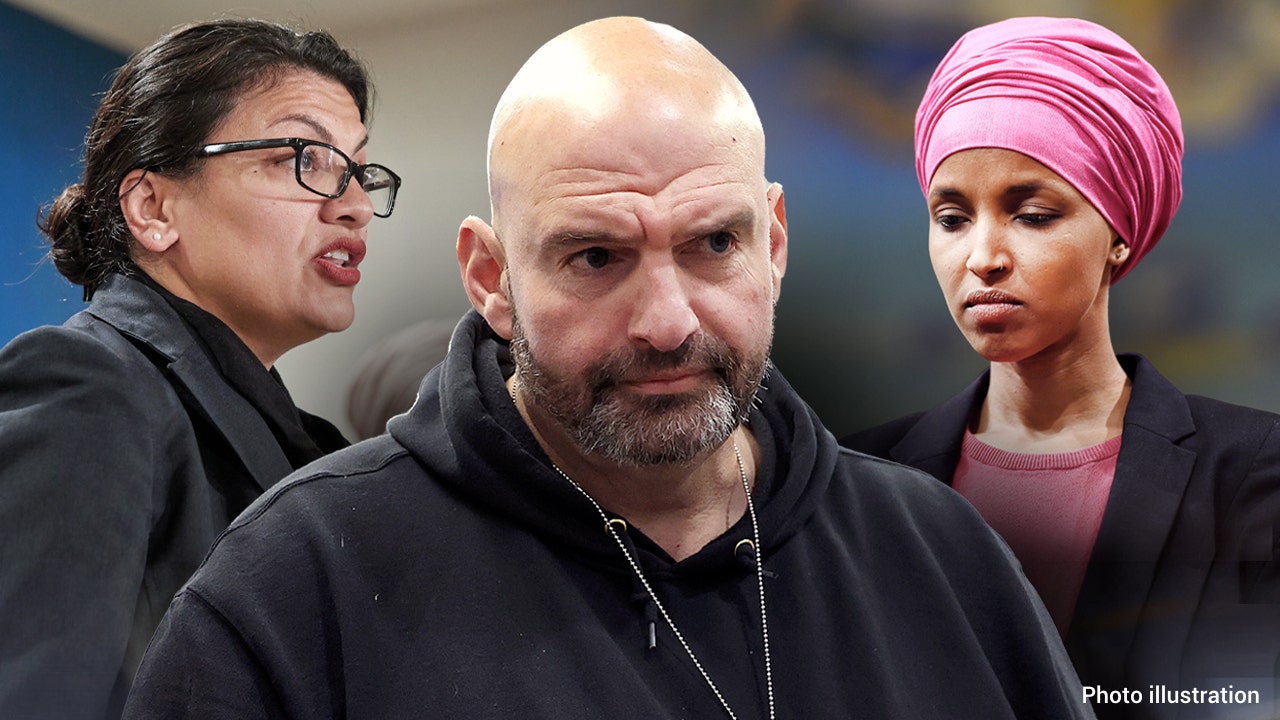
As the dust settles, one thing is clear: John Fetterman has ignited a firestorm that will not be easily extinguished. Whether his actions will lead to real change or result in a public backlash remains to be seen. The next steps for Fetterman and the 14 lawmakers he’s targeting will likely be a long, drawn-out battle, with legal, political, and public opinion weighing heavily on the outcome.
Fetterman’s speech will go down in history as one of the most dramatic and controversial moments in modern political discourse, a defining moment where one man stood up and demanded accountability, even when doing so placed him squarely in the crosshairs of the political establishment. Only time will tell if his calls for action will have the intended effect, but for now, he has succeeded in making the nation—and the world—take notice.
A Call to Action or a Political Stunt?
As the debate over Fetterman’s words continues, the question remains: is this truly a necessary call for accountability, or is it a political stunt designed to stir the pot? Only time will tell. But one thing is certain—Fetterman has managed to spark a national conversation that cannot be ignored. Whether this marks a turning point in American politics or a temporary blip in the ongoing culture wars, it is clear that Fetterman’s actions will resonate for years to come.