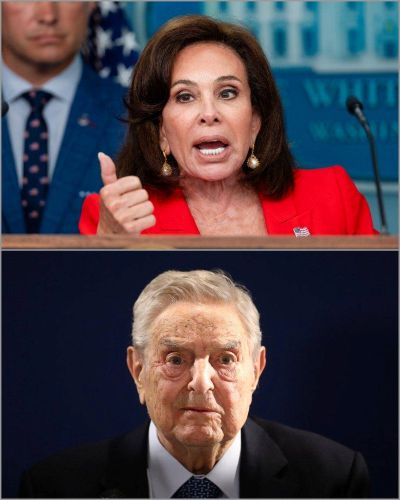
In an unexpected and aggressive move that has left both Wall Street and the Washington establishment reeling, Judge Jeanine Pirro has launched a legal battle aimed at dismantling what many see as the financial backbone of national unrest. By reclassifying the covert funding of large-scale protests as “organized crime,” Pirro has directed her efforts straight at George Soros, one of the world’s most influential billionaires. Her decision to freeze assets globally and initiate an investigation into the “dark money” that supports political unrest has sent shockwaves through political circles, financial markets, and legal communities alike. What began as a political maneuver now has the potential to turn into a global financial reckoning.
Jeanine Pirro, known for her fierce stance on law and order, has never been one to shy away from high-profile confrontations. This time, however, she has gone beyond the usual rhetoric. Her bold legal move, which redefines how we view funding for protests, is now at the heart of a major legal and political battle. It’s no longer just about politics; it’s about legal accountability, financial transparency, and dismantling the global influence networks that many argue have destabilized democracies around the world. Pirro’s strike aims to make a profound statement and initiate a legal precedent that could reshape the future of political funding and influence.
The Legal Framework: Dismantling “Dark Money” Networks
Pirro’s legal challenge against George Soros and the financial networks that fund large-scale protests is grounded in her deep understanding of both the law and the way money flows within modern political systems. For years, the term “dark money” has been used to describe political donations that come from sources that are not easily traceable or regulated, often influencing elections and policy decisions without transparency. Soros, through his Open Society Foundations, has long been a target of critics who accuse him of using his wealth to influence political outcomes, promote certain ideologies, and support movements that are controversial.
By reclassifying the funding of protests as “organized crime,” Pirro is taking an unprecedented legal step that could potentially disrupt the entire network of financial support for what she views as politically motivated unrest. Her decision rests on the idea that these financial networks, which have funneled vast sums of money to various causes, are not simply benign donations—they are covert operations aimed at swaying public opinion, toppling regimes, and destabilizing governments.
Pirro’s argument suggests that money flowing from powerful individuals and organizations to various protest movements is not a benign form of political expression but instead a carefully crafted strategy to manipulate political systems for personal or ideological gain. By classifying this funding as organized crime, Pirro is invoking a legal strategy that treats these operations the same way the U.S. government deals with criminal syndicates, targeting the flow of money and the entities that channel it.
The Global Consequences: Freezing Assets and Ending the Era of Dark Money
Perhaps the most significant aspect of Pirro’s move is her request to freeze global assets connected to Soros and his associated networks. This legal maneuver is unprecedented—in essence, it represents an effort to dismantle the financial infrastructure that allows dark money to flow freely and remain hidden from public scrutiny. By freezing these assets, Pirro aims to bring transparency to the vast sums of money that have fueled unrest, protests, and political movements around the globe.
The global reach of this action cannot be understated. Soros and his foundations operate in numerous countries, and their financial influence extends into areas that most political observers are unaware of. By targeting these global financial channels, Pirro has thrown down the gauntlet, challenging not just Soros, but the entire network of influence that spans across international borders.
If Pirro’s legal actions succeed, they could have far-reaching consequences for the future of political activism. This move would send a powerful message to other wealthy individuals and organizations who have used financial power to sway political decisions without facing public accountability. It’s a call to end the era of dark money that has defined political campaigns, protests, and social movements for years.
The Shockwaves: Reactions from Washington and Wall Street
The impact of Pirro’s legal strike has been swift and powerful. Washington D.C. was immediately thrown into a state of disarray, with both Democrats and Republicans expressing concern over the implications of her decision. While Soros has long been a controversial figure, his influence on political movements—particularly those on the left—has made him a target of conservative commentators and politicians. However, Pirro’s action has brought unprecedented scrutiny to the way political movements are financed, and many have questioned whether the U.S. government has the right to target individuals based on their financial support of social causes.
Wall Street has also felt the shockwaves of Pirro’s announcement. The financial markets are sensitive to changes in policy that might threaten the flow of capital, especially when those changes come from high-profile legal figures. Investors are now asking: If Soros’ global network can be disrupted, who else might be next? The idea of freezing assets and targeting financial networks in the name of political stability has led to fears of a financial crackdown that could have a ripple effect on the global economy.

The Role of Soros in Modern Activism and the Global Political Landscape
To understand the full weight of Pirro’s challenge, it’s important to recognize the role that George Soros and his Open Society Foundations have played in shaping the modern political landscape. Soros, a Hungarian-American billionaire, has spent billions of dollars supporting a wide range of causes, from democracy promotion to criminal justice reform to climate change activism. His influence has been felt on a global scale, with his financial backing being credited with influencing everything from pro-democracy movements in Eastern Europe to racial justice protests in the United States.
Soros’ approach to philanthropy is often controversial because of the sheer amount of power and influence he holds. His network has often been accused of using its financial might to promote political agendas that align with his own worldview. For some, Soros is a champion of social justice and democratic ideals; for others, he represents the dangerous overreach of billionaire influence in shaping public policy.
Pirro’s legal actions represent a direct challenge to this global network. She argues that Soros’ foundations have gone beyond simple philanthropy and have instead become active participants in political warfare—using their wealth to manipulate political outcomes across the world. By calling for the freezing of these assets, Pirro aims to cut off the financial resources that sustain this network, potentially weakening the influence that Soros and other wealthy philanthropists have on global politics.
The Legal and Ethical Debate: Is This a Step Too Far?
As with any major legal action, Pirro’s move has sparked a heated debate about the balance between freedom of speech, political activism, and the role of government in regulating influence. For some, this is a necessary step to ensure transparency in political funding and prevent the undue influence of billionaires on the democratic process. But for others, Pirro’s actions represent an overreach that could set a dangerous precedent for how the government handles political donations and activist movements.
The legal challenges to Pirro’s move will undoubtedly be complex, involving multiple layers of both domestic and international law. Activists and legal scholars have already raised concerns that freezing global assets could infringe on individuals’ rights to engage in political activities, regardless of their wealth or influence. Soros, for his part, has remained largely silent on Pirro’s actions, but his legal team is expected to mount a vigorous defense in the coming weeks.
The Future of “Dark Money” and Political Influence
What Pirro’s move has accomplished is to bring the issue of dark money—and the influence of billionaires in politics—into the public spotlight in a way that has never been done before. This confrontation has forced both lawmakers and activists to reckon with the financial systems that fuel political movements and protests. While the ultimate legal outcome remains uncertain, the conversation around political transparency is likely to continue to intensify.
If Pirro’s actions are successful, they could mark the beginning of a new era in which political influence is subject to far greater scrutiny. For many, the idea of dismantling global influence networks that operate without public accountability is long overdue. For others, however, it raises serious questions about the freedom of individuals to contribute to the causes they believe in.