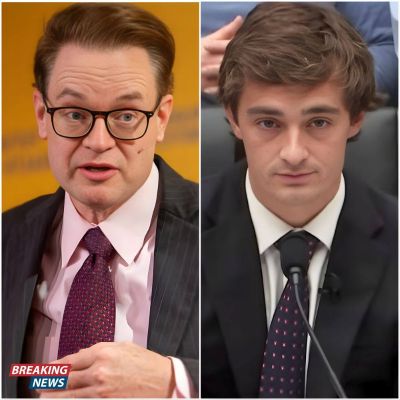
In an era where words carry immense power, the act of silencing someone has taken on a new level of significance. When Jim O’Neill, a political commentator, publicly declared that Nick Shirley was “dangerous” and needed to be “silenced,” he set the stage for an unexpected confrontation that would unfold on a national stage. Little did O’Neill know, this would not be a quiet, subdued disagreement—it would become one of the most captivating confrontations over free speech in recent media history. The spotlight shifted from O’Neill’s accusations to Shirley’s courageous response, leading to an event that would leave the nation stunned and captivated.
The Call for Silence
Jim O’Neill’s post was brash, bold, and direct—words meant to shut down any discussion, to stifle opposing viewpoints, and to assert dominance in the ongoing political discourse. When he described Nick Shirley as a “dangerous” figure and called for him to be silenced, O’Neill believed he was putting an end to a narrative he found unacceptable. The words were aimed at shutting down a voice that O’Neill believed posed a threat to his views. But in doing so, he unwittingly ignited a powerful firestorm.
Such accusations have become commonplace in a world where media personalities, pundits, and public figures often use their platforms to destroy the reputations of those with whom they disagree. O’Neill’s actions, though, would not be met with silence or fear. Instead, they would catalyze a bold act of defiance—a refusal to bow to pressure and to be silenced. This confrontation would set the stage for a broader debate about free speech, accountability, and the role of media figures in shaping public discourse.
Nick Shirley’s Unexpected Response
Rather than react with outrage, anger, or a heated counter-attack, Nick Shirley took a radically different approach. Instead of merely defending himself or firing back insults, Shirley chose to expose O’Neill’s words for what they were—unchallenged, unfiltered, and unsanitized. It was a brilliant move, turning O’Neill’s own words back onto him in the most public of ways.
On a nationally televised broadcast, Shirley walked confidently into the spotlight, a moment that would become ingrained in the annals of media history. With the world watching, he pulled out every single post, tweet, and statement that O’Neill had made about him. Shirley didn’t shout or retaliate with scathing remarks. Instead, he calmly read aloud every accusation, every derogatory statement O’Neill had made about him, word for word, with no edits or distortions. The silence in the room grew heavier with each statement read aloud.
It was more than just a public reading. Shirley’s decision to do this was a statement in itself—a statement that actions speak louder than words, and that the truth can’t be hidden behind the veil of public opinion. The act of reading O’Neill’s words aloud turned the tables completely. Shirley was no longer the one on the defensive. Instead, he was in control of the narrative.
Exposing Contradictions
As Shirley’s voice echoed through the airwaves, the contradictions in O’Neill’s remarks became glaringly obvious. O’Neill had claimed to defend free speech while simultaneously calling for Shirley to be silenced. The very person who made a career of championing the right to free expression was the same one trying to shut down a voice he didn’t like. Shirley’s public reading exposed this hypocrisy in real-time, forcing O’Neill to confront the double standard he was operating under.
The moment was powerful. It wasn’t just about the clash between two individuals—it was a broader critique of how public figures often use their platform to silence dissenting opinions, even while advocating for freedom of speech. Shirley had put O’Neill on the spot, demanding he answer for the contradictions in his statements. The hypocrisy was impossible to ignore.
This public exposure was more than just an attempt to embarrass O’Neill—it was an opportunity to engage in a larger conversation about accountability, truth, and the role of free speech in public discourse. Shirley’s actions raised questions that needed to be addressed: What happens when the very people who claim to defend free speech are the ones trying to suppress it? How far can we allow the use of power and influence to dictate the boundaries of public debate?

Free Speech Under Threat
The confrontation between Shirley and O’Neill had far-reaching implications for the broader conversation about free speech. In a time when public figures are often quick to attack others for their opinions, Shirley’s stand became a powerful reminder of the importance of defending freedom of expression, no matter the cost. The very act of silencing someone, even through social media posts, is a form of censorship—one that can lead to a dangerous precedent for society.
Shirley’s decision to confront O’Neill in such a direct manner was not just a defense of his own free speech but a defense of the larger principle that everyone has the right to speak without fear of retaliation. It was a poignant reminder that free speech is not only the right to speak but the responsibility to ensure that others, even those with whom we disagree, are able to voice their opinions as well.
At its core, this confrontation was about the power of words, the necessity of engaging with ideas—even those we find uncomfortable—and the importance of preserving the open exchange of ideas. It’s easy to call for silence when we disagree with something. It’s harder to engage with it, to confront it head-on, and to let the truth shine through, unfiltered.
A Nation Reacts
As Shirley continued reading O’Neill’s posts, the nation watched with bated breath. The event had escalated from a simple confrontation between two men to a powerful commentary on the state of free speech in the modern age. The real-time exposure of O’Neill’s contradictions sparked discussions across social media platforms, talk shows, and news outlets. The public reaction was swift, with many applauding Shirley for his bold stance and unwavering commitment to transparency.
In the weeks that followed, debates about the power of speech, the role of public figures in shaping public opinion, and the dangers of censorship flooded the media. Shirley’s actions had not only exposed O’Neill’s hypocrisy but also reignited a conversation about the broader implications of silencing dissenting voices.
The message was clear: We must never let the powerful suppress the voices of the many, and we must always be vigilant in defending our right to speak openly and freely. By standing his ground and exposing the truth, Shirley had sparked a national dialogue about the importance of protecting the very freedoms we often take for granted.
The Aftermath: A New Beginning for Free Speech?
What began as a single confrontation between two men soon grew into a national movement for free speech. Shirley’s willingness to stand up to O’Neill’s attacks became a rallying cry for those who believed in the power of discourse, debate, and the free exchange of ideas.
In the aftermath of the televised reading, Shirley’s actions resonated far beyond the immediate incident. They sent a powerful message: that free speech is not something to be taken for granted and that we must fight to protect it—especially in the face of those who would seek to suppress it for their own gain.
The lessons from this confrontation are clear. When faced with efforts to silence us, we must not cower. We must confront those who seek to undermine our rights and expose the contradictions in their arguments. By doing so, we honor the true spirit of free speech and the democratic principles on which this nation was founded.
Conclusion: A Lasting Legacy
Nick Shirley’s decision to read Jim O’Neill’s posts aloud was more than just a bold response to an attack—it was a transformative moment in the ongoing fight for free speech and the open exchange of ideas. In an age where silence can be used as a weapon, Shirley’s words became a shield for the truth. His actions will be remembered as a powerful example of standing up for what is right, no matter the odds.
As the nation continues to grapple with the complexities of free speech in the digital age, the lessons learned from this confrontation will remain vital. We must all remain vigilant in defending our right to speak, to express, and to challenge the status quo. For as Shirley so boldly demonstrated, the truth will always prevail—especially when we refuse to be silenced.