Republican Hilary Holley has defeated Democrat Edwin Pérez in a Special Election for Florida House District 51, denying Democrats a pickup they had hoped to secure in a Midterm election year. With nearly all precincts reporting, Holley won with about 55% of the vote, holding the seat for Republicans.
Holley will replace term-limited Republican Rep. Josie Tomkow in the Polk County-based district. The race had drawn attention as Democrats looked to capitalize on broader economic concerns and Midterm dynamics.
“Representative-Elect Hilary Holley in House District 51 will be a tremendous addition to the Florida House of Representatives, given her unmatched experience in the agricultural community,” House Speaker-Designate Sam Garrison said. “Voters have made the right decision in electing the far superior candidate,” he said.
District 51 includes much of Polk County, including Polk City, Davenport, Haines City, Lake Alfred and Auburndale. Despite a slightly narrower margin than Tomkow’s nearly 57% win in 2024, Republicans maintained a clear advantage in the district.
Voter registration numbers also favored the GOP, with roughly 34% of voters registered as Republicans compared to about 31% as Democrats. Nearly one-third of voters in the district are not affiliated with a political party.
Holley also held a significant fundraising edge throughout the race. She raised more than $122,000, along with nearly $134,000 in in-kind contributions, largely from Republican Party organizations.
Pérez raised just over $13,000 and added a $2,000 loan, with less than $1,800 in in-kind support. The financial gap underscored the uphill battle Democrats faced in attempting to flip the seat.
Holley secured endorsements from several prominent Florida Republicans, including former state Sen. Denise Grimsley, Agriculture Commissioner Wilton Simpson and former Rep. Neil Combee. She also received backing from Tomkow, whom she will replace.
Holley currently serves as Executive Director of the Florida FFA Foundation, overseeing programs that support more than 65,000 student members across the state. She previously worked as a legislative aide and held roles in agricultural education and public service.
Pérez, a community advocate from Haines City, centered his campaign on affordability issues, rising insurance costs and a projected funding shortfall in the Polk County school district. Officials have warned the current $2.5 million gap could grow significantly in the coming years.
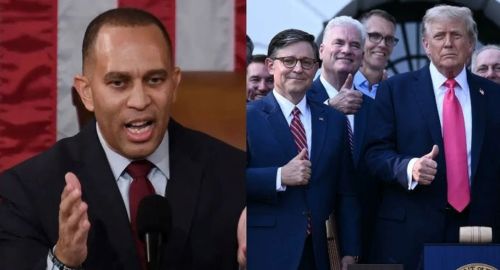
Meanwhile, House Minority Leader Hakeem Jeffries is criticizing a Republican-led election bill, accusing GOP lawmakers of pushing what he described as “voter suppression” measures.
Jeffries has been attacking Republicans for moving ahead with efforts to pass the Save Act.
“Republicans have adopted voter suppression as an electoral strategy. That’s what the so-called SAVE Act is all about,” Jeffries said during a press conference. He argued the latest version of the bill goes further than a previous iteration passed in 2025.
The SAVE America Act would require proof of citizenship for voter registration nationwide. It would also establish a federal voter ID requirement for casting ballots in national elections.
The legislation, led by Rep. Chip Roy and Sen. Mike Lee, includes provisions aimed at improving the verification of voter eligibility. Supporters argue the bill is necessary to secure elections and ensure only eligible citizens vote.
Jeffries also raised concerns about data-sharing provisions in the bill.
“This version, as I understand it, will actually give the Department of Homeland Security the power to get voting records from states across the country,” Jeffries said.
Senate Republicans recently moved the SAVE America Act forward, setting up a renewed legislative fight this week over election rules as GOP leaders signal the bill will be a top priority in the coming weeks.
The Senate voted 51–48 to advance the legislation last week by approving a motion to proceed, clearing a key procedural hurdle and allowing formal debate to begin.
The measure now returns to the floor after previously stalling, with Sen. Mike Lee urging conservatives to maintain pressure on lawmakers to ensure final passage.
Supporters of the SAVE America Act say it is designed to strengthen confidence in federal elections by adding new requirements and oversight mechanisms.
The bill would require proof of U.S. citizenship when registering to vote in federal elections, tighten voter identification rules, and expand federal involvement in maintaining voter rolls.