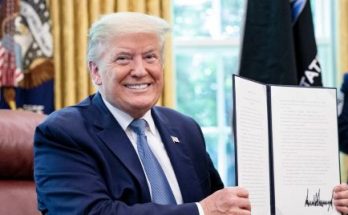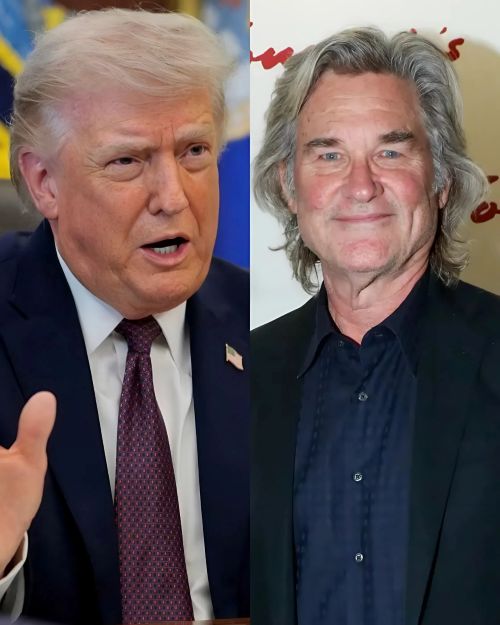
In an unexpected turn of events, a public confrontation between Donald Trump and Hollywood icon Kurt Russell has escalated into a fiery moral debate that is sure to have repercussions for years to come. It all started when the former president, never one to shy away from controversy, decided to attack Russell. Trump’s words were aimed at the actor’s support of the transgender community and his outspoken stance on LGBTQ+ rights. Labeling Russell an “insult to Jesus,” the former president sought to score some cheap political points by accusing Russell of being “too woke” and “too progressive” for his own good. However, in an unexpected and unforgettable twist, Kurt Russell did not back down. Instead, he delivered a sermon so powerful that it left Trump, and the world, reeling.
The Initial Attack: Trump’s Targeting of Kurt Russell
The seeds of this public clash were sown during a campaign rally, where Trump, in typical fashion, chose to launch a verbal attack on those he considered “liberal elites.” In a moment of heated rhetoric, Trump singled out Kurt Russell, the renowned actor known for his roles in iconic films such as Escape from New York and The Hateful Eight. Russell, who has been an outspoken advocate for LGBTQ+ rights, especially the transgender community, was accused by Trump of being an “insult to Jesus” for his progressive views. Trump’s comments were a reaction to Russell’s firm belief that “trans kids are God’s children too.”
Trump’s statements were as bold as they were controversial. They were designed to appeal to his base, many of whom are distrustful of the increasing visibility of LGBTQ+ rights in the public sphere. Trump’s accusations weren’t just political; they were moral attacks, seeking to paint Russell as a figure who was somehow betraying Christian values.
But what Trump didn’t anticipate was the strength and depth of the response he would receive.
Kurt Russell’s Response: A Lesson in Morality and Courage
Standing at a historic site, the place where so many monumental events have unfolded, Kurt Russell was not the celebrity, nor the individual, that Trump expected to find an easy target. Instead of being defensive or resorting to insults, Russell turned the tables, not just defending his beliefs, but delivering a message of powerful moral conviction.
“The President of the United States just declared that I am an insult to Jesus,” Russell began. His voice was steady, his presence commanding. “Do you want to know what really insults Jesus?” he asked, before launching into a series of moral indictments that struck to the heart of the issue.
“Stripping healthcare away from the sick while cutting taxes for billionaires,” Russell continued, his words piercing the air. “That’s what insults Jesus. Deporting strangers and tearing children away from their mothers’ arms. That’s what insults Jesus.”
As the room fell silent, Russell’s words carried weight beyond politics, beyond mere controversy. This was a man speaking from a place of deep moral clarity, and the room was hanging on every word.
But he didn’t stop there. Russell pushed further, taking aim at the systemic issues that have long plagued the political landscape of America. He spoke out against the wars that have claimed countless lives, the corruption that has rotted away at the fabric of governance, and the hypocrisy that runs rampant in certain circles of power.
“Do you know what insults Jesus?” Russell asked again. “It is bombing and killing innocent schoolchildren in Iran, sending our brave soldiers—men and women alike—to their deaths in endless wars. It is covering up records related to Epstein and then refusing to prosecute anyone involved.”
These were not just political talking points; they were moral charges—powerful condemnations of a system that many believe has lost its way. The room was silent, absorbing the gravity of Russell’s words.
A Call for Reflection: Russell’s Moral Clarity
Russell’s message wasn’t just a response to Trump’s attack; it was a call for a deeper moral reflection, one that resonated far beyond the confines of that room. He reminded everyone that, while he himself was not a perfect Christian, there is only one perfect Christian. “There is only one perfect Christian, and He was crucified on the cross 2,000 years ago,” Russell said. This was a subtle but profound reminder that, as Christians, we are all fallible—our task is not to claim perfection, but to live by the example set by Christ.
But it was what Russell said next that truly struck at the heart of the matter, especially for those who claim to be defenders of Christian values. He turned the question back to the fundamental teachings of Jesus, challenging the very ideas that Trump had attempted to weaponize.
“Jesus taught us to love our neighbors as ourselves,” Russell declared. “Can we imagine war in Heaven? Can we imagine discrimination in Heaven? Can we imagine poverty in Heaven? Then why do we tolerate such things right here on Earth?”
These words were not just a moral critique—they were a direct challenge to the status quo. By invoking the very essence of Christian teachings, Russell confronted Trump not only on his political stances but also on the moral inconsistencies that many see as undermining the Christian values he claims to uphold.

The Power of Wisdom and Conviction
As Russell spoke, it became clear that this was more than just a political battle—it was a fight for the soul of a nation, a battle over the values that would shape the future. Russell didn’t engage in petty insults or resort to the kinds of divisive rhetoric that Trump was known for. Instead, he spoke with wisdom, with the kind of moral clarity that transcends politics.
“I am not a perfect Christian,” Russell admitted. “But I do know one thing: I am called to love my neighbors, to care for the vulnerable, and to stand up for justice.”
In that moment, Kurt Russell’s words were not just a response to an attack—they were a sermon, a message that resonated with those who believe in compassion, justice, and the fundamental dignity of every human being.
The Fallout: Trump’s Reaction and the Broader Impact
Trump, as expected, didn’t take kindly to Russell’s moral challenge. His typical tactic of belittling and insulting his opponents had backfired, and in doing so, he had given Russell a platform to share a message that would resonate far beyond the political sphere.
The response from the public has been overwhelming. Social media erupted with praise for Russell, with many applauding his courage and conviction in the face of a direct attack. His message quickly went viral, shared by thousands who were inspired by his words. Russell had not just defended his beliefs—he had taken a stand for what he believes to be true, regardless of the consequences.
The political ramifications of this confrontation remain to be seen. But one thing is certain: Kurt Russell has set a new standard for how public figures can respond to attacks. His response wasn’t just political—it was personal, moral, and grounded in the values that matter most.
Conclusion: A Moment That Will Be Remembered
In the end, Kurt Russell’s response to Trump was more than just a political rebuttal—it was a call to action. It was a reminder that in times of division and uncertainty, wisdom, love, and conviction can cut through the noise. It was a powerful reminder that, no matter how loud the rhetoric gets, the truth will always shine through.
As this story continues to unfold, one thing remains clear: Kurt Russell’s lecture to Donald Trump will not be forgotten anytime soon. It was a moment of clarity in a world often clouded by political noise, a moment where one man stood tall and spoke truth to power.
The question now is: will others follow his lead?