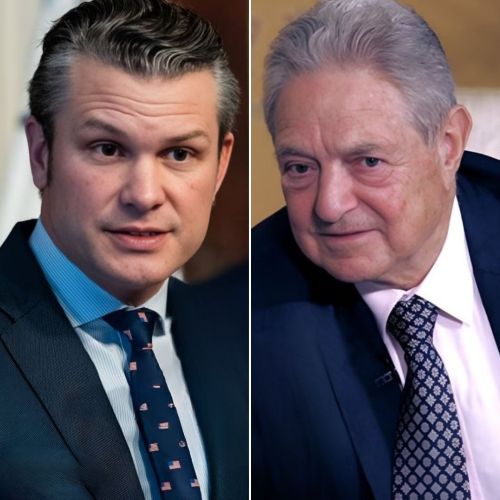
In an unprecedented move that has sent shockwaves through the political landscape, Pete Hegseth, a prominent political figure, has introduced a bold bill aimed at blocking billionaire George Soros from allegedly funding protests across America. This groundbreaking bill, if passed, could have sweeping implications for political activism, free speech, and the influence of wealthy individuals in shaping the national dialogue.
Hegseth’s proposal targets the financial mechanisms that Soros, through his network of organizations, allegedly uses to fund and amplify protests across the nation. The bill seeks to classify such activities as organized crime under the Racketeer Influenced and Corrupt Organizations (RICO) Act, one of the most powerful legal tools in the U.S. judicial system.
The bill’s language is clear and powerful: It aims to freeze Soros-linked accounts overnight, effectively stopping the flow of funds into any protest movements or political causes Soros is suspected of supporting. This has already sparked fierce debates across the political spectrum, with critics arguing that the bill is an overreach that could infringe on free speech and political participation. Supporters, on the other hand, see it as a necessary step to curtail the influence of a foreign billionaire in shaping U.S. domestic policies.
The RICO Act: A Powerful Weapon Against Corruption
The RICO Act, originally passed in 1970 to combat organized crime, has been used in various legal battles to dismantle criminal enterprises, including mafia organizations. Under the bill, it’s a crime to participate in an enterprise that engages in a pattern of racketeering activity, such as money laundering, fraud, and extortion. The law’s inclusion of “criminal enterprises” and its wide-reaching powers give it a broad scope to target individuals or entities involved in illicit financial schemes.
By introducing this bill, Hegseth is pushing for the classification of Soros’s alleged funding mechanisms as a form of racketeering. If this bill succeeds, it would mark a historic shift in the way financial contributions to political movements are handled, particularly when such contributions come from influential figures like Soros, who is known for his extensive involvement in global politics.
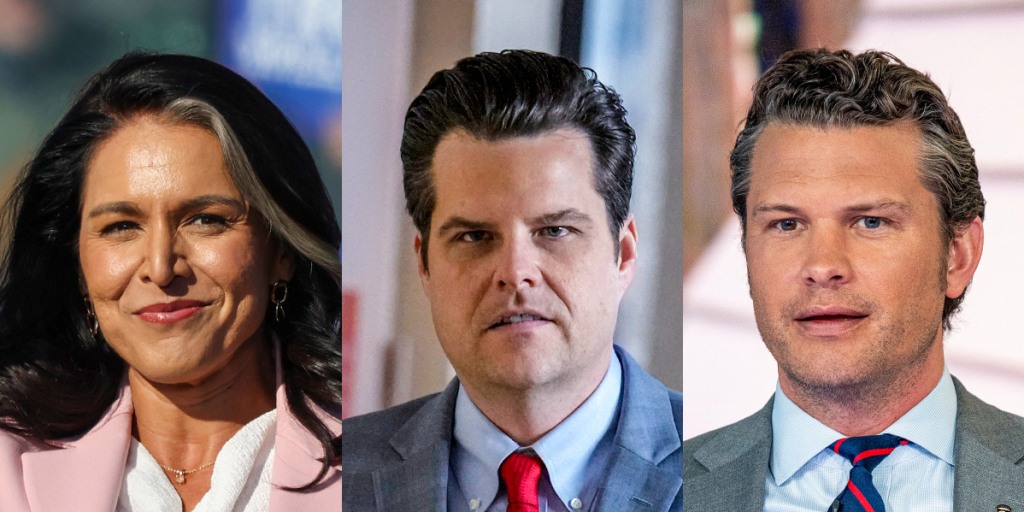
The Role of George Soros: A Divisive Figure in American Politics
George Soros is no stranger to controversy. The Hungarian-born financier and philanthropist has long been at the center of political debate in the United States. His Open Society Foundations, which provide financial support to various progressive causes, have been accused by some of attempting to sway U.S. politics to align with his globalist, left-wing views. Soros has been a strong supporter of causes such as criminal justice reform, voting rights, and immigration, which has led to allegations that he is attempting to push an agenda that undermines American sovereignty.
Critics argue that Soros’s influence over U.S. politics is not only undue but also potentially dangerous, as his financial contributions to various political causes are seen as a form of manipulation. His support for movements like Black Lives Matter and his alleged backing of certain protest activities across the country have raised questions about the role of money in shaping grassroots activism. The new bill seeks to combat these concerns by limiting the ability of individuals like Soros to fund political activism under the guise of philanthropy.
However, supporters of Soros’s philanthropy argue that he is merely exercising his right to support causes that align with his values and vision for a better world. They contend that the bill is an attack on free speech and an attempt to silence political opposition by targeting wealthy donors. In their view, the bill could have a chilling effect on political donations and activism, particularly among those who seek to challenge the status quo.
The Political Implications: Free Speech vs. Accountability
The introduction of this bill has ignited a fierce debate over the balance between free speech and the need for accountability in political activism. On one hand, the bill’s supporters argue that it is necessary to curb the influence of wealthy individuals and organizations that seek to manipulate the political process through financial contributions. They contend that such contributions create an uneven playing field, where the voices of ordinary Americans are drowned out by the interests of the rich and powerful.
On the other hand, opponents of the bill argue that it is a blatant infringement on free speech and the right to assemble. Political movements, they argue, should not be hindered by the financial limitations of their supporters. By targeting individuals like Soros, the bill risks creating a dangerous precedent in which wealthy donors are silenced, regardless of their political affiliations. The issue of political donations has long been contentious in American politics, with many arguing that campaign finance reform is necessary to ensure a level playing field.
The bill also raises questions about the role of foreign influence in American politics. While Soros is a U.S. citizen, his financial support for causes around the world has drawn the ire of those who believe that foreign-born billionaires should not have such a significant impact on U.S. domestic politics. Soros’s philanthropic activities, particularly his support for progressive causes, have often been framed as an effort to promote a globalist agenda, which some view as incompatible with American values.

The Future of Protests in America
If the bill passes, it could change the future of protests and political movements in America. Activism, which has historically relied on grassroots support and donations from individuals, could face a dramatic shift in the way it is funded and organized. Protest movements that have traditionally relied on financial backing from wealthy donors could find themselves unable to secure the resources necessary to continue their work.
Moreover, the bill’s potential to freeze Soros-linked accounts could have a domino effect on other philanthropists and activists who support progressive causes. While the bill targets Soros specifically, its language could also apply to other wealthy donors who contribute to political movements. This could lead to a crackdown on political donations across the board, limiting the ability of individuals and organizations to fund causes they believe in.
The Bill’s Journey Through Congress: What’s Next?
As the bill moves through the legislative process, it is likely to face significant opposition from Democrats and advocacy groups. Many on the left view the bill as a direct attack on their values and a tactic to suppress political dissent. The opposition is expected to rally around the principle of free speech and the idea that individuals should be able to support the causes they care about without fear of government intervention.
The bill’s journey through Congress will be closely watched, as it could set a precedent for future legislation aimed at regulating political donations and activism. If it passes, it could lead to more stringent laws regulating the way money is funneled into political causes, particularly when it comes to protests and grassroots movements.
While Hegseth’s bill is just one piece of legislation, its implications are far-reaching. It highlights the growing tension between free speech and the influence of money in politics. The debate over Soros’s influence on American politics is just one chapter in a larger conversation about the role of wealth and power in shaping the national dialogue.
Conclusion: The Battle for Political Influence
Pete Hegseth’s bill is a powerful move in the ongoing battle for political influence in the United States. It raises important questions about the role of money in shaping public discourse and the extent to which wealthy individuals and organizations can influence the political process. While the bill’s proponents argue that it is necessary to protect American democracy from foreign influence, critics contend that it is an overreach that threatens fundamental freedoms.
As the bill progresses through Congress, it will likely continue to be a focal point of debate, with both sides passionately defending their positions. Whether the bill succeeds or fails, it will undoubtedly have lasting implications for the way protests are funded and organized in America. The future of political activism, particularly when it comes to financial backing, will never be the same